Long-haul flights with kids are the final boss of parenting. 10 hours in a pressurised tube with recirculated air, an audience of 300 who will silently judge you, and a small child who is now learning the concept of “infinity” through the medium of “how long is this flight?”
Here’s a been-there dad’s survival guide for long-haul flights with children.
Picking the right seats
Packing for the flight
Surviving the flight
Landing and jet lag
FAQ
Before you fly — what matters
- Book direct if possible. A one-stop saving of £200 is not worth 3 extra hours of airport with a 5-year-old.
- Fly overnight where you can. Kids (and you) sleep most of the flight. Landing in the morning at the destination is manageable.
- Check child-luggage allowance — a car seat, pram, and hand luggage for kids are usually free additions. Budget airlines vary.
- Pre-select meals via the airline website — children’s meals are often first served, less waiting.
- Know the passport rules — child passports expire at 5 years old, adult at 10. Check 3 months before travel; many countries require 6-months-plus validity.
- Arrive early — 3 hours minimum for international. Kids need wee stops, food, and there’s always an emergency nappy change.
Picking the right seats
Under 2s (lap infants)
Request bassinet seats (bulkhead row). Free on most airlines if booked early. Don’t wait — call the airline as soon as you book. These run out fast.
2–6 year olds
Bulkhead rows if still available. Otherwise, middle rows of wide-body planes (Airbus A350, Boeing 787) — extra space, cleaner air, easier access to the aisle.
Older kids
Pre-book seats together. Some airlines (Ryanair, Wizz) charge for this; pay it rather than risk being split. Middle rows usually give the most flexibility.
Avoid
- Back rows (turbulent, close to toilets — smell)
- Window seats for kids who need frequent wee stops
- Exit rows (minimum age varies; often 15+)
Packing for the flight — the hand luggage checklist
Food and drink
- Empty water bottles (fill after security — hydration matters hugely)
- Significant snacks — more than you think. Crisps, fruit, cheese, sandwiches. Airplane food often rejected by kids.
- A full meal if night flight, in case they sleep through service
- Treats kept back as bribes for peak difficulty moments
Entertainment
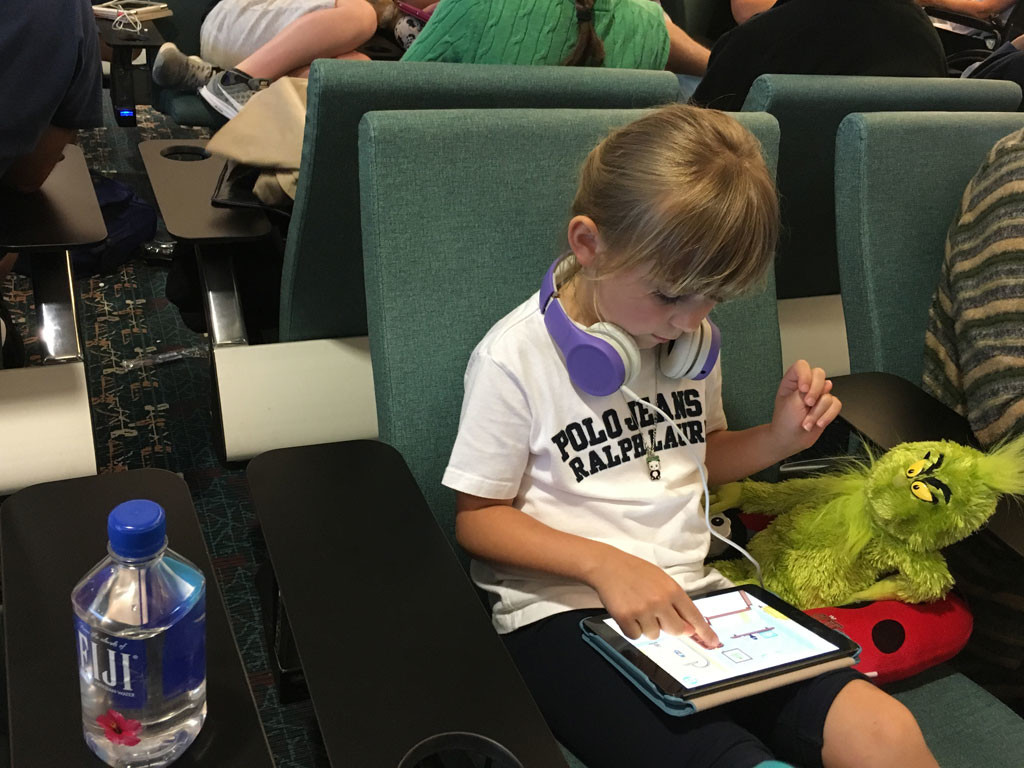
- Tablet pre-loaded with downloaded shows/films — screen time rules suspend on flights
- Kids’ headphones (proper wired pair — Bluetooth fights with plane systems)
- A few small new toys or activity books to reveal mid-flight
- Colouring books and markers (non-permanent)
- Card games (UNO, Top Trumps) for older kids
Essentials
- Changes of clothes for each child and spare for you
- Calpol, Piriton, any regular meds in original packaging
- Wet wipes, antibac gel
- Blanket or comforter they associate with sleep
- Ear bud aeroplane pressure relief (older kids)
- Empty plastic bag for sick/dirty nappies
Surviving the flight itself
Takeoff and landing
Ear pressure hurts little ones. Breastfeed or bottle-feed babies during descent. Older kids: chewing gum, sweets, or drinking. Yawning works.
First two hours
Meal service + toilet orientation. Let them watch TV, eat, and settle in.
Sleep time
Change into PJs, lights down, white noise, blanket, comforter. Kids often sleep much better on planes than parents expect. Don’t force it if they’re not tired — force-tired kids get worse.
If they won’t sleep
Walks up and down the aisle (shift change with the other parent). Cartoons. Snacks. A scheduled “boring” activity — colouring — can sometimes trigger actual sleep.
Dealing with a screaming baby
Most people around you have sympathy, not judgment. Focus on your child, not the audience. If it’s ear-pressure pain, milk/bottle/dummy. If it’s over-tired, walk them. Sometimes you just have to ride it out.
Landing and jet lag
Kids generally handle jet lag better than adults, but it can still knock them sideways for 3–5 days.
- Natural light exposure in the morning of the destination — gets circadian rhythm resetting quickly.
- Don’t nap on arrival (or only short, before 3pm local time). Push through to local bedtime.
- First night expect early wake-up — 4–5am is normal. Quiet activities ready.
- Melatonin for adults is fine; for kids only after consulting your GP. Not suitable for under-5s.
FAQ
3–4 months (pre-movement, sleep a lot) or 4+ years (can understand and be entertained). The toddler phase (18 months–3 years) is the hardest — mobile, demanding, limited attention for screens. Avoid major trips in that window if you can.
Yes, though often less severely than adults. Most kids adjust in 3–5 days. Key strategies: natural sunlight in the morning at the destination, avoid long naps, push through to local bedtime. Younger kids (under 3) adapt faster than school-age kids.
Yes, within reason. Flight is a special context; the usual rules don’t apply. Most parents find screen rules suspend for the duration of the trip. Just bring eye drops (screens dry eyes in the plane environment) and ensure they still eat and drink.
For 10+ hour flights, extra-legroom economy (£50–£150 each) often pays back in sanity. Premium economy is worth it if you can afford it — genuinely more space, better service, better food. Business class is rarely worth 4–5x the cost unless children can genuinely use the flat bed.
Sick bags are in every seat pocket. Alert a flight attendant — they’ll bring wipes and can help with clean-up. Keep spare clothes accessible. Many parents give kids a small dose of antihistamine (Piriton) before the flight specifically to prevent travel sickness — check with your GP if appropriate.
The bottom line
Pick overnight direct flights, book bassinets early, pack more snacks than you think you need, and accept that the flight is a tunnel to get through rather than a holiday moment to savour. Screens and headphones are your friends. The family on the row in front has been there too. And when you land, it’s nearly always worth it.