“Dad, can I get an airsoft gun?” If you’re going to hear this at some point in your parenting career, it’s worth knowing exactly what you’re being asked. Airsoft is a surprisingly structured, safety-focused activity, but it’s also got very specific UK laws around who can own what, and what protective kit is non-negotiable.
Here’s a dad’s guide to whether airsoft is safe for kids, what the actual rules are, and how to start them off properly.
UK law for kids and airsoft
Non-negotiable safety gear
Best starter kits for kids
Where to play properly
FAQ
Is airsoft actually safe for kids?
Short answer: yes, significantly safer than it looks, provided proper safety rules are followed. The UK Airsoft Retailers Association (UKARA) and organised sites have strict protocols around eye protection, FPS (feet-per-second) limits, and minimum engagement distances.
The pellets are small plastic BBs weighing 0.2–0.4g, travelling at well-regulated speeds. A hit from a standard airsoft replica feels like a hard pinch — it stings, might leave a small welt, but doesn’t break skin under normal circumstances.
Compare that to paintball (harder hit, bigger bruise), archery (arrows), or indeed hard tackles in rugby. Airsoft, played properly, is lower impact than most contact sports.
Where it becomes dangerous:
- No eye protection — can cause permanent eye injury
- Unregulated FPS (above 350fps, hits start to break skin)
- Close-range shooting without minimum engagement distance rules
- Outside organised sites, with no rules enforced
UK law: what’s legal at what age?
UK airsoft law is stricter than many parents realise:
Under 18
- Cannot purchase an airsoft gun
- Cannot be sold one, even by an adult
- Can use one under supervision on private land or at organised skirmish sites with parental permission
18+
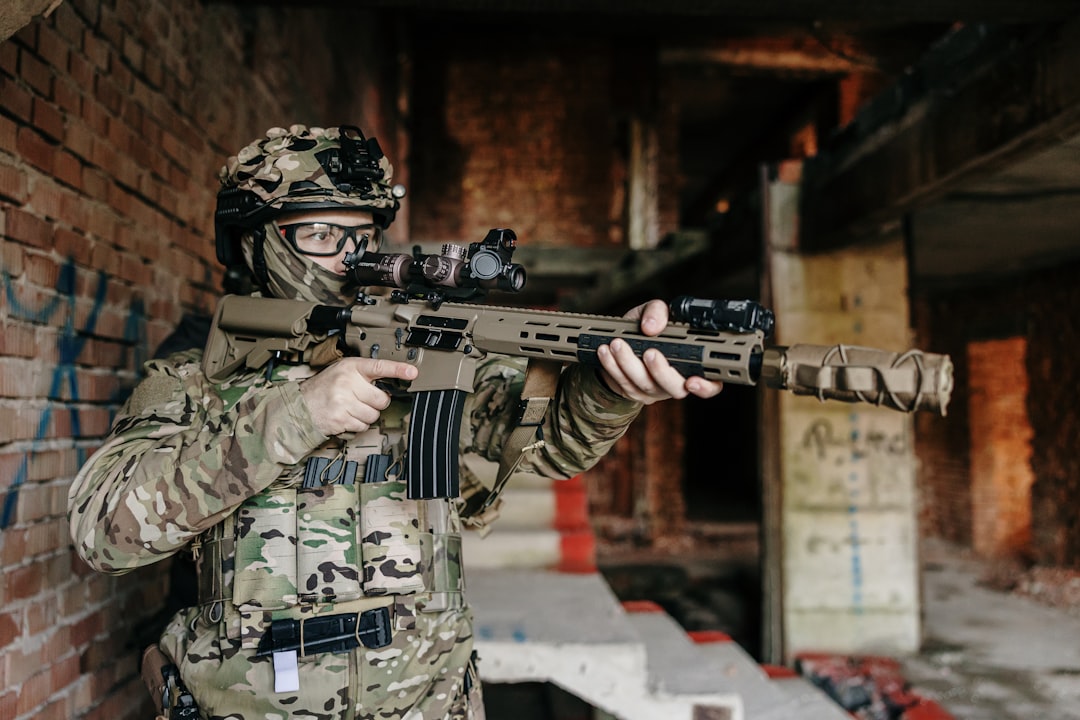
- Can purchase a “two-tone” airsoft gun (at least 50% of the gun is a bright primary colour) without any additional licence
- Can purchase a “realistic imitation firearm” (RIF) — a realistic-looking airsoft gun — only if they have a valid defence under the VCRA (Violent Crime Reduction Act). The most common is being a member of an organised skirmish site (UKARA membership)
FPS limits (muzzle velocity)
- Single-shot rifles (sniper): max 500 fps with 0.2g BBs
- Automatic rifles: max 350 fps typically at skirmish sites
- Pistols: often capped lower
Above these limits, an airsoft gun is classed as a “Section 5” firearm — illegal to own without a firearms licence.
Non-negotiable safety gear for kids
Eye protection — the only genuinely non-negotiable item
Full-seal ballistic-rated goggles. Not sunglasses, not ski goggles, not cheap tinted plastic. Look for goggles rated to ANSI Z87.1 or EN166. Brands: ESS, Revision, Oakley ballistic range. Budget £25–£80.
Face mask / lower face protection
Especially for kids — adult teeth + airsoft hit = dentist visit. A mesh mask or full-face lower guard. £15–£40.
Gloves
Hands take more hits than you’d think. Basic gloves (mechanics gloves from Screwfix work fine) protect knuckles. £10–£25.
Long sleeves and trousers
Obvious, but overlooked. Skin-on-skin hits are the ones that hurt. Proper long-sleeved clothing is mandatory at most skirmish sites.
Sturdy footwear
Not trainers with mesh sides. Hiking boots or military-style boots with ankle support, given most airsoft is played on rough ground.
Best starter kits for kids (age-appropriate)
Ages 8–12 — supervised private use only
Low-power “junior” airsoft is fine for supervised garden use with full safety kit. Look for spring-powered pistols or rifles under 200fps. Around £30–£60. Brands: Cybergun, Bulldog Arms junior models.
Ages 12–15 — supervised skirmish days
Some UK skirmish sites run specific “junior” days for 12–15s with reduced FPS limits (around 250fps). Children use site-provided rental guns and safety kit. Budget £40–£60 per junior day. Perfect way to see if they’re into it without buying anything.
Ages 16–18
Standard adult skirmish days with parental consent at most sites. Still can’t purchase a gun themselves until 18 — use rentals.
18+
A sensible starter setup for a newly 18-year-old:
- A decent mid-range AEG (Automatic Electric Gun) — G&G Combat Machine range is brilliant value (£120–£200)
- Full-seal goggles + face protection (£50)
- Spare magazines (£30)
- BBs (£15 for thousands)
- Total around £250–£300 for a solid first loadout
Where to play properly
UK has 100+ organised skirmish sites. These are vastly better than back-garden airsoft — regulated FPS, clear rules, medics on site, proper battlefield setups.
- First and Only — huge national chain, quality sites
- Airsoft GI events
- UK Airsoft Players Union (UKAPU) — list of recommended sites
- Most sites have a “walk-on” day for newcomers — rental kit, instructor briefing, £40–£70 per day
Check airsoft-forums.co.uk or search “airsoft skirmish [your county]” for local options.
FAQ
Yes. Airsoft BBs are plastic (6mm), low-weight, low-velocity when used within legal limits. Traditional BB guns use metal pellets at higher velocities — can cause more serious injuries and are more heavily regulated. Airsoft is the safer, more kid-appropriate option.
You can be stopped and questioned. Airsoft guns must be transported in a discreet, covered case — never carried openly in a public place. Two-tone guns are clearly recognisable as toys; RIFs (realistic imitation firearms) look real and can cause genuine police response if carried visibly. Always in a bag or case.
A sharp sting comparable to a hard flick with an elastic band. Occasionally leaves a small welt, rarely breaks skin when played within FPS limits and with proper clothing. Kids get used to it quickly — less painful than a rugby tackle.
Supervised garden use from 10+ with low-power kit. Organised junior skirmish days from 12. Standard skirmish from 16 with parental consent. Purchase of own airsoft gun only at 18. Maturity matters more than age — if the child can consistently follow safety rules, they’re ready. If not, they’re not.
Different experiences. Paintball hurts more but gives visible “I was hit” marks, which is more obvious for refereeing. Airsoft is less painful but relies on honour — you have to call hits on yourself. Many sites now run “airsoft for kids” days with specific junior rules. Either works.
The bottom line
Airsoft is a legitimate, safety-regulated sport that’s genuinely enjoyable for kids from about age 10 onwards under proper supervision. Eye protection is the non-negotiable. Start with a supervised skirmish day — rented kit, instructor briefing — to see if they love it before buying anything. And remember: in the UK, under-18s can’t buy airsoft guns at all, so any purchases are yours.